Care Connect: Designing Collaborative Care
An assistive & collaborative platform connecting elderly/ chronically ill patients and caregivers for enhanced healthcare management and rapid response.
Process:
User research
Personas
User flows
UX Design
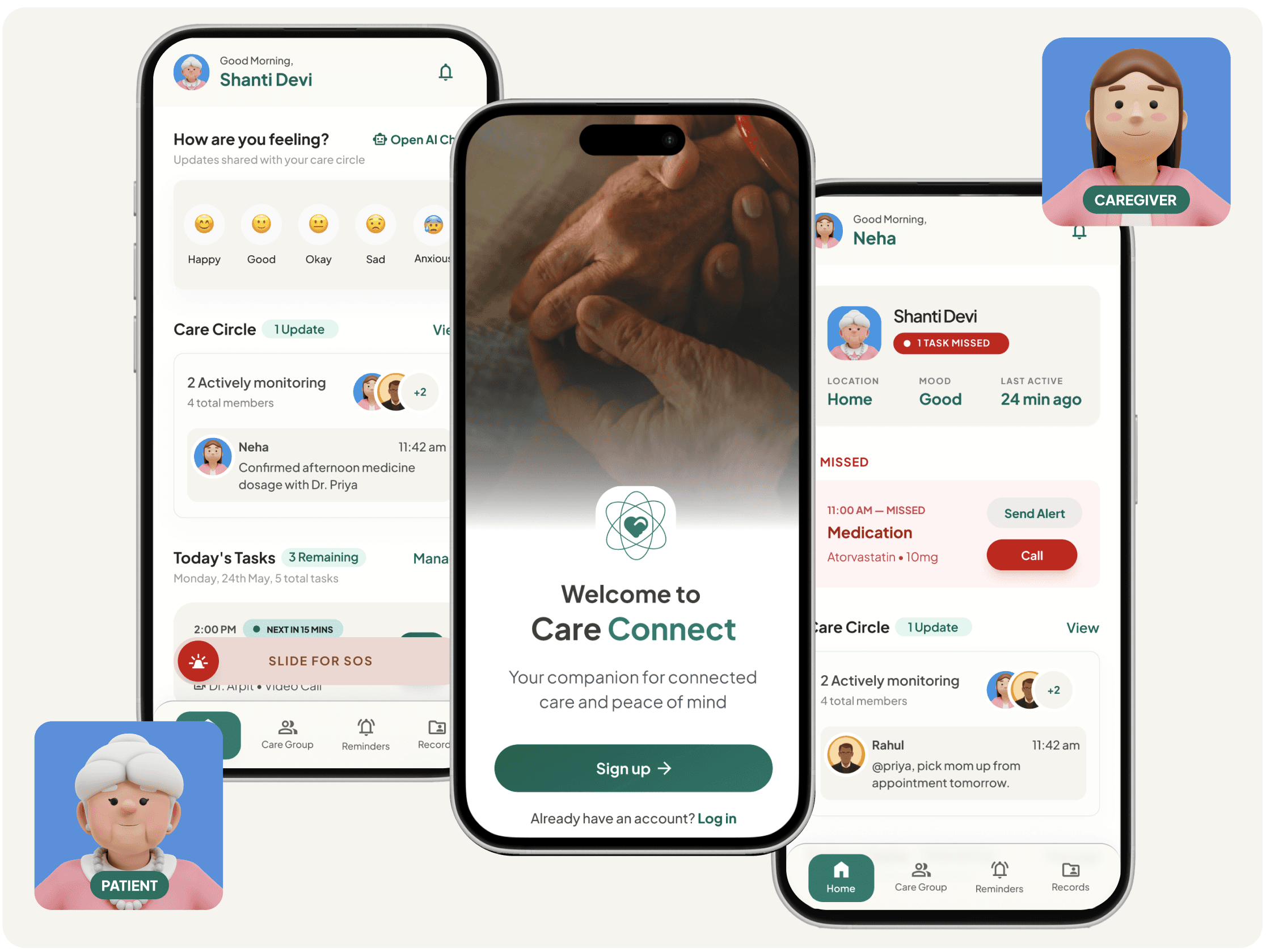
Problem
Elderly and chronically ill individuals often rely on caregivers for daily support, but when care is managed remotely, coordination becomes fragmented and inconsistent.
Goals and Objectives
The goal is to design a unified care experience that acts as a digital support system, helping patients and caregivers stay connected, coordinated, and prepared for both daily care and emergencies.
Success metrics include increased medication adherence, reduced emergency response time, and higher caregiver engagement.
Research and key Insights
My research involved understanding the challenges faced by patients and caregivers around medication adherence, emergency preparedness, and appointment management. I conducted 6 interviews, competitive analysis and secondary research to identify what works and what doesn't in existing healthcare applications.
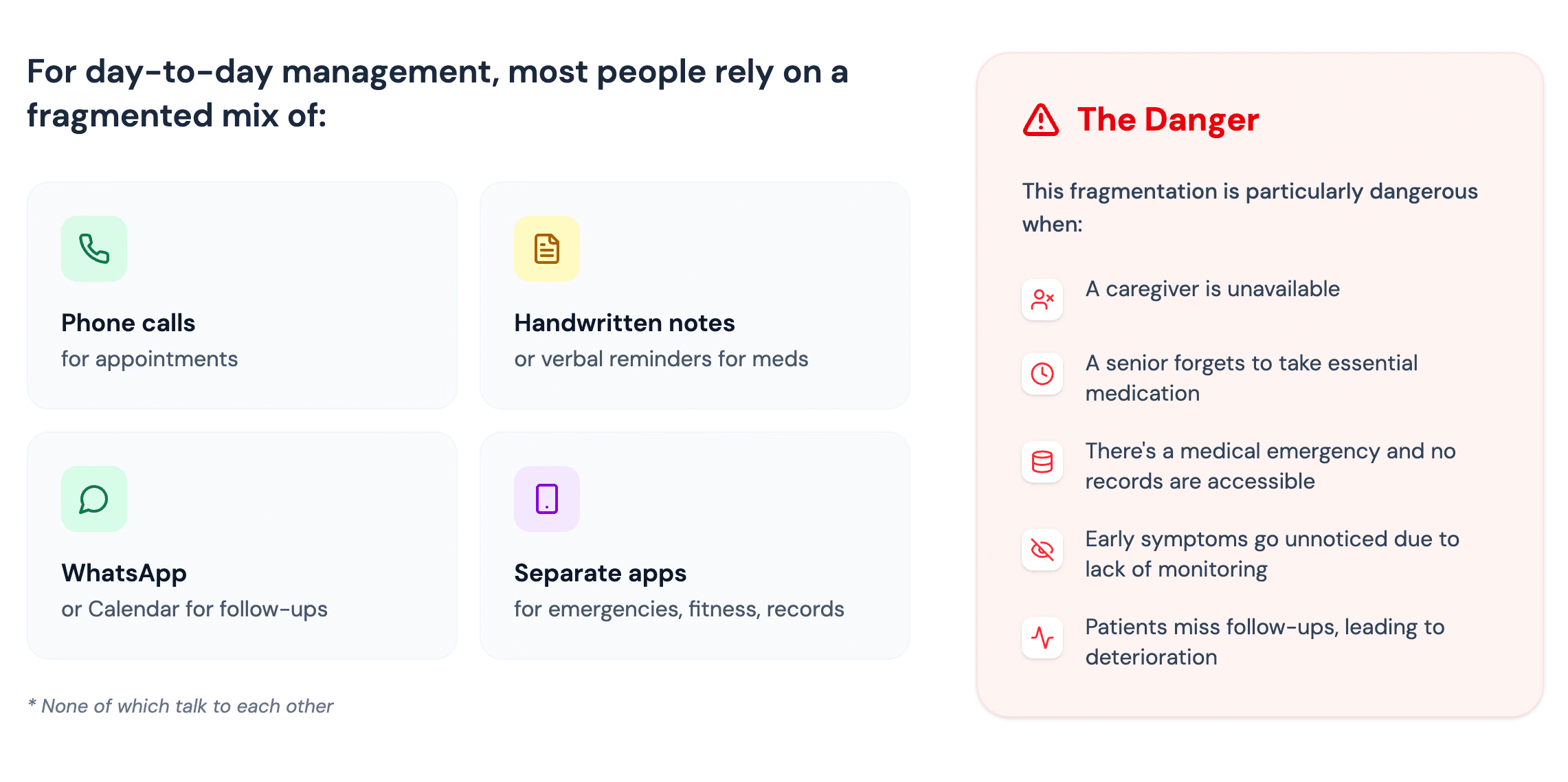
This highlighted a clear need for a system that not only centralizes information, but also enables seamless coordination between patients and caregivers.
User Personas

Market overview
The current market includes platforms like Medisafe, MyMeds (medication reminders), Apple Health (health data tracking), CaringBridge, IANA Care (Collaborative Care) and emergency-focused apps like Life Alert. While each solves a specific need well, most tools operate in isolation, lacking a unified system for daily care, caregiver coordination, and emergency support.
Feature | Medisafe | CaringBridge | IANA Care | Life Alert | CareConnect |
|---|---|---|---|---|---|
Medication reminders | ✓ | ✗ | Partial | ✗ | ✓ |
Caregiver collaboration | ✗ | Partial | ✓ | ✗ | ✓ |
Emergency alerts | ✗ | ✗ | ✗ | ✓ | ✓ |
Regional language support | ✗ | ✗ | ✗ | ✗ | ✓ |
Medical records | ✗ | ✗ | Partial | ✗ | ✓ |
Ideation and Concept Development
How Might We's
To bridge the gap between our research findings and tangible solutions, I reframed the core problems into actionable "How Might We" statements to guide the brainstorming process.

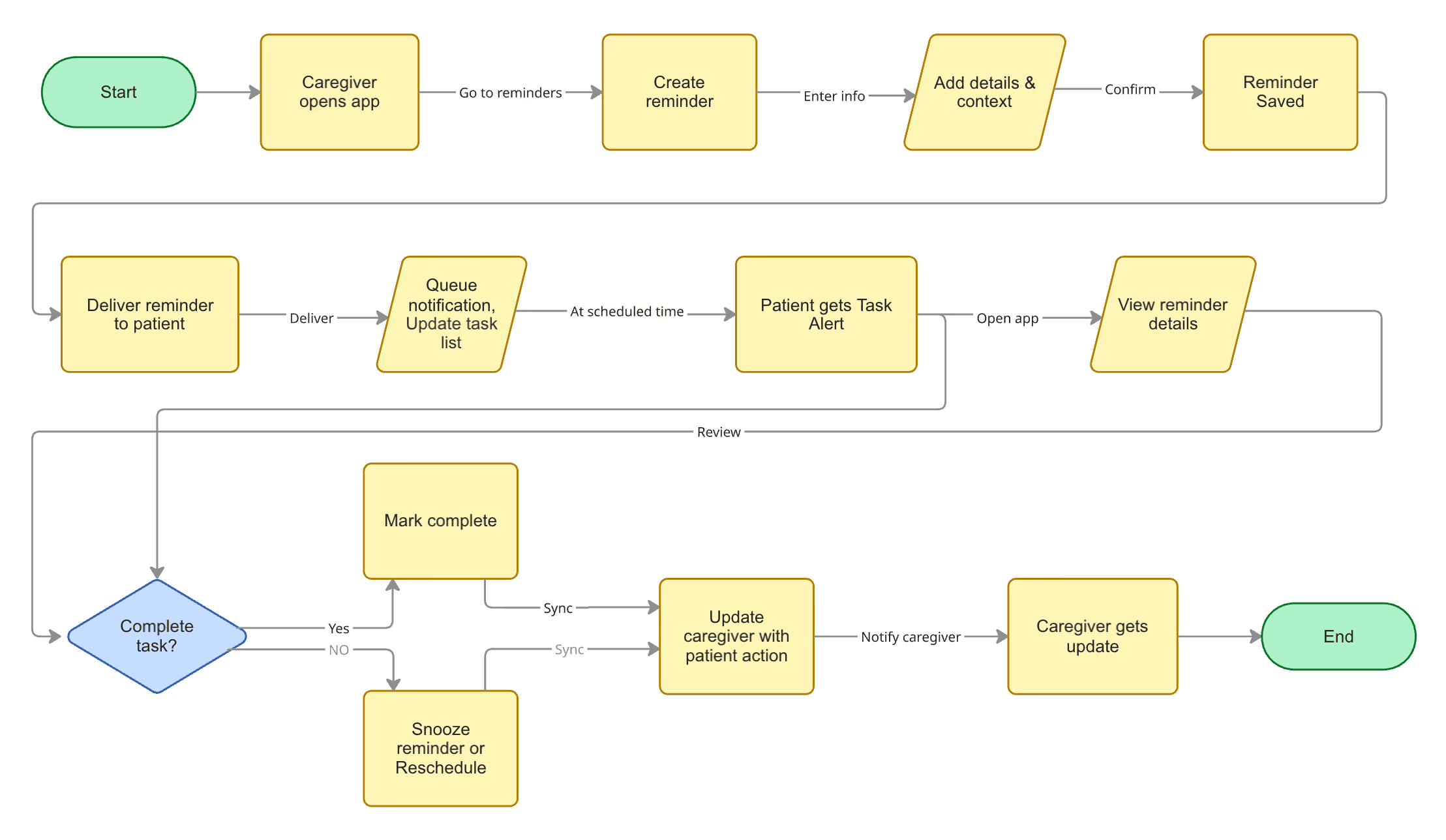
While the full scope of CareConnect includes these core features, for this case study I chose to deep dive into one: the collaborative reminder-setting flow between patient and caregiver.
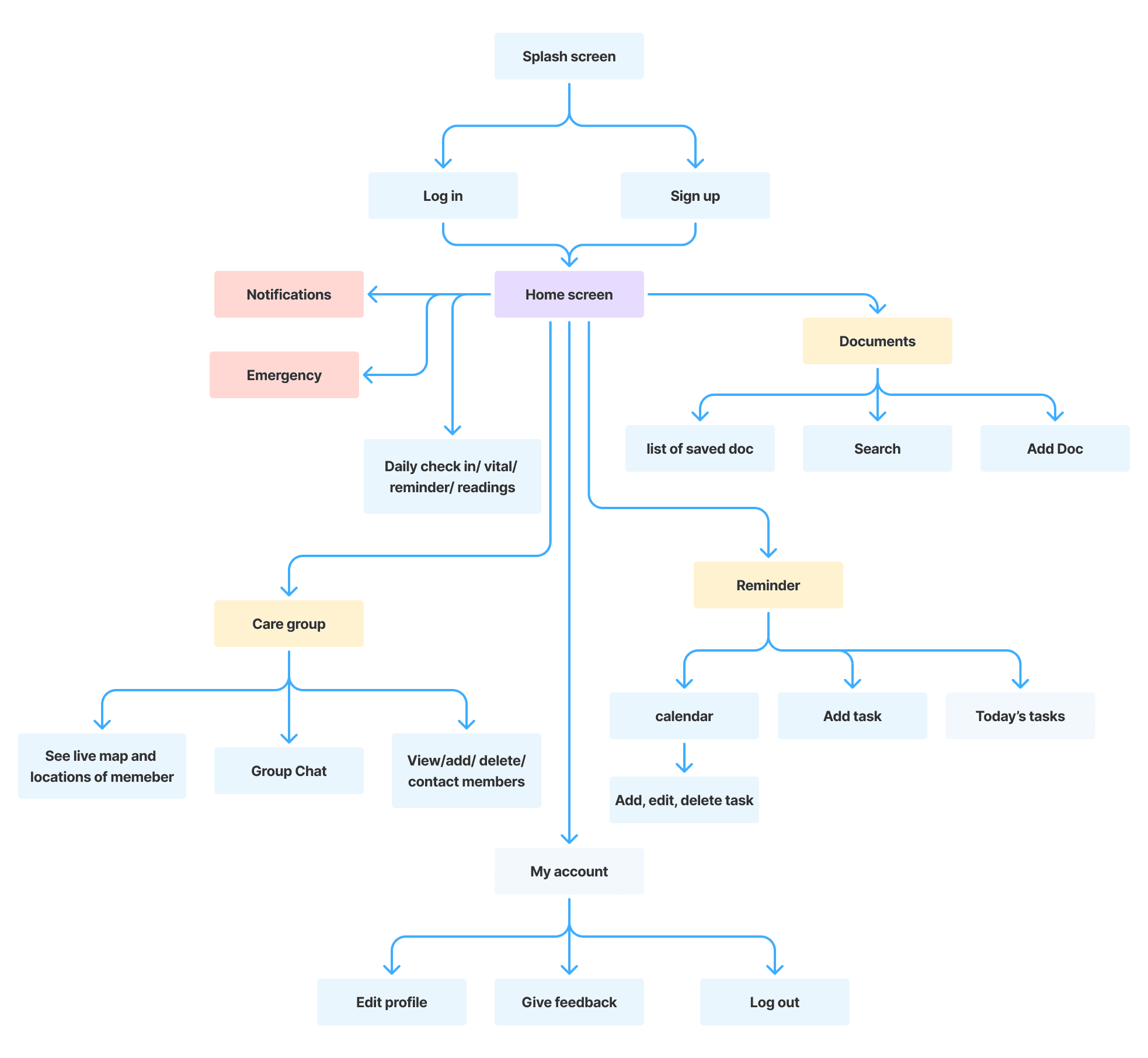
Full Product Scope: IA (Patient)
Design
For this case study i decided to focus mainly on the collaboration part of the app.
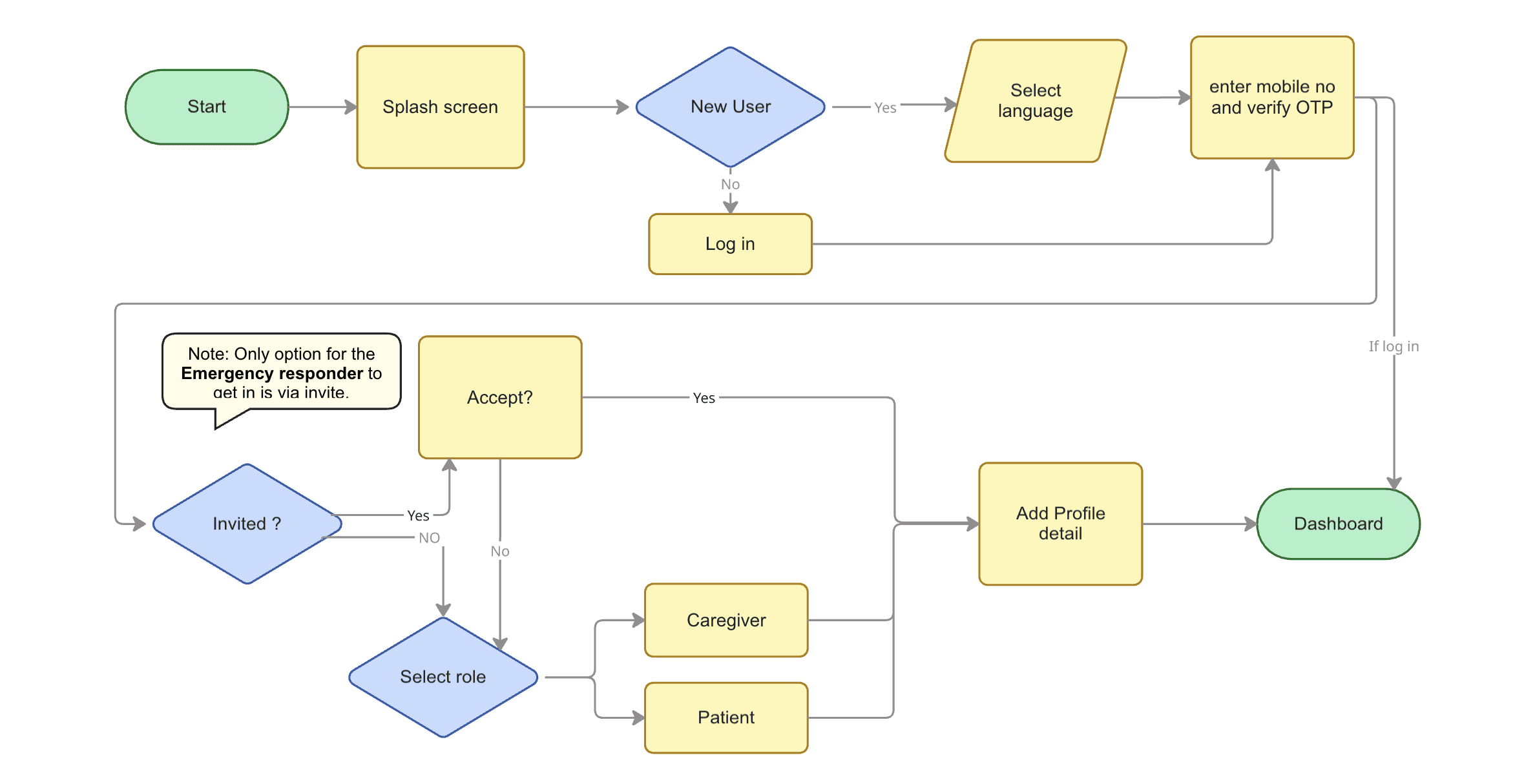
Deep Dive : Role Based Onboarding flow

Deep Dive : Task & Reminder Management

Impact & Learnings
Through this project, I learned the importance of designing healthcare systems as interconnected experiences rather than individual features. I also gained a deeper understanding of the challenges faced by elderly individuals and caregivers in managing healthcare. In the future, I would prioritize usability testing with both patients and caregivers to further validate interaction patterns and accessibility considerations.
