AI Powered B2B Trip Planner & Admin Portal
Designed for tourism businesses, destination marketing organisations (DMOs), and visitor centres looking to turn their websites into end-to-end planning and booking platforms, 40% average booking growth for partners.
Process:
User research
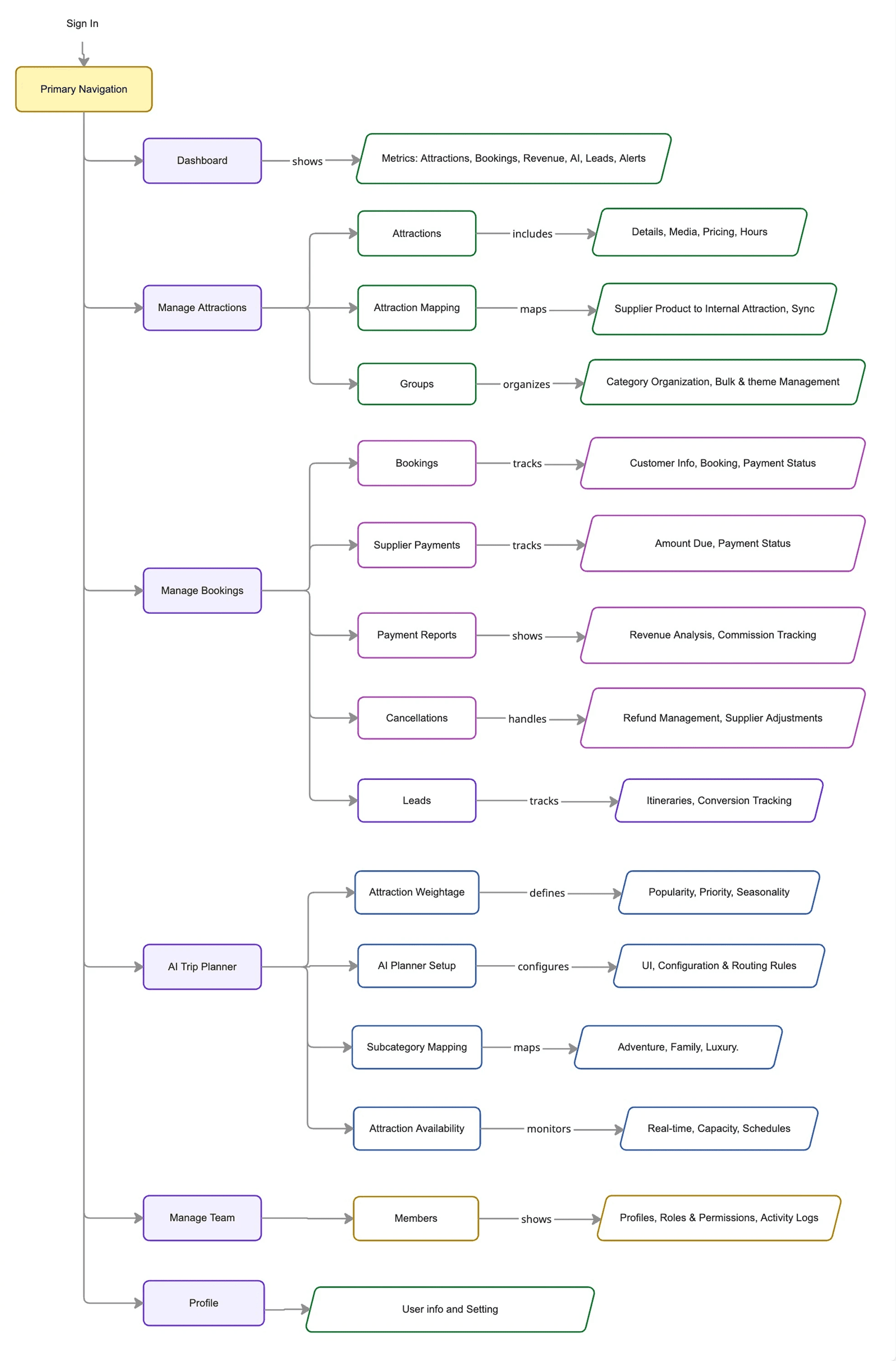
IA

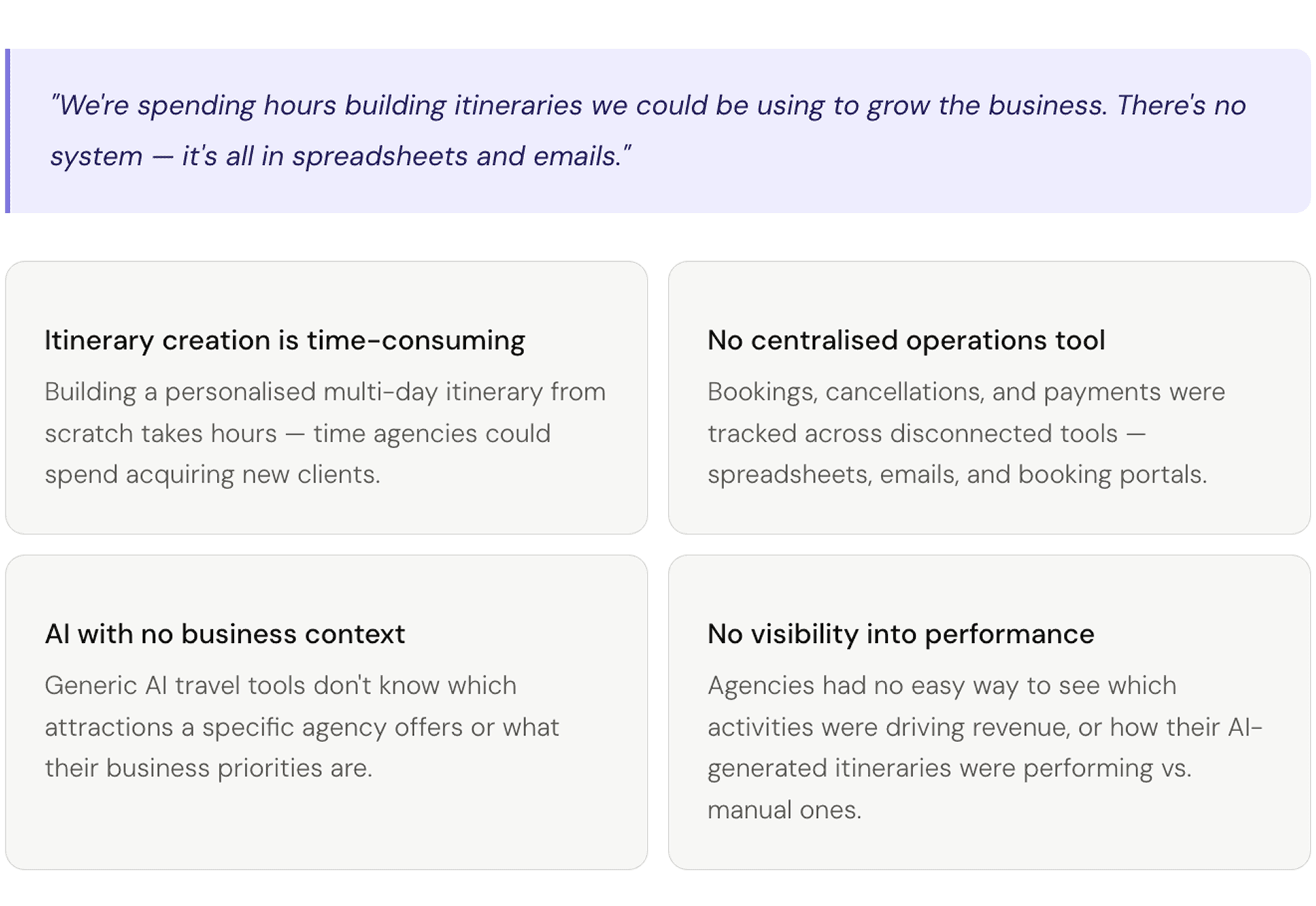
Problem
Travel agencies managing multiple clients at once struggle to create personalised, well-researched itineraries efficiently — it's time-consuming, error-prone, and nearly impossible to scale.
Goals and Objectives
The goal was to design a holistic B2B platform with two interconnected parts: an AI-powered trip planning portal that generates personalised itineraries for travellers, and an admin dashboard that gives travel agencies full visibility and control over their clients, bookings, AI setup and attractions.
The AI is informed by each agency's own database of attractions and business preferences so every itinerary it generates is tailored not just to the traveller, but to the business serving them. The dashboard then becomes the operational layer: managing what was planned, what was booked, and what needs attention.

The Product - AI itinerary tool
Before getting into my work, it's important to understand the traveller-facing side of the product. The AI portal is a guided, multi-step experience where travel agencies enter details for their clients. A travel agency staff member or the traveller themselves answers a series of questions — and the AI generates a complete, day-by-day itinerary with bookable activities.
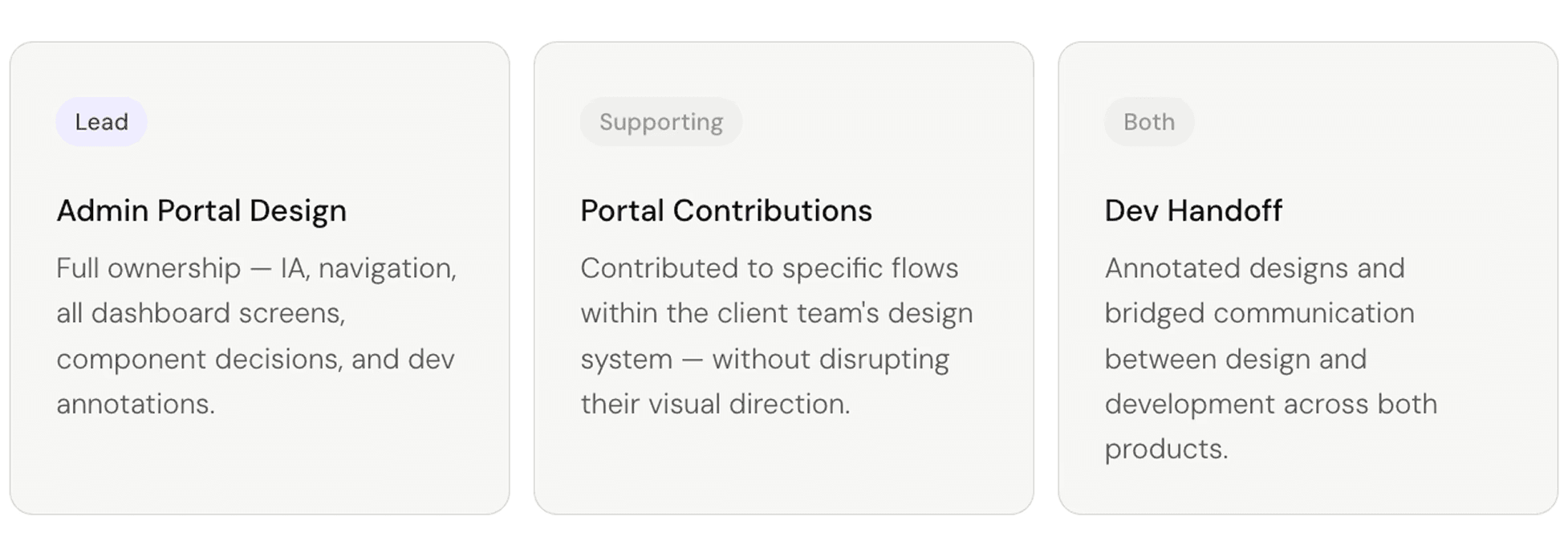
This part of the product was designed primarily by the client's design team. My contribution here was supporting specific flows and owning the design-to-development handoff — making sure the team's designs were communicated and implemented accurately.
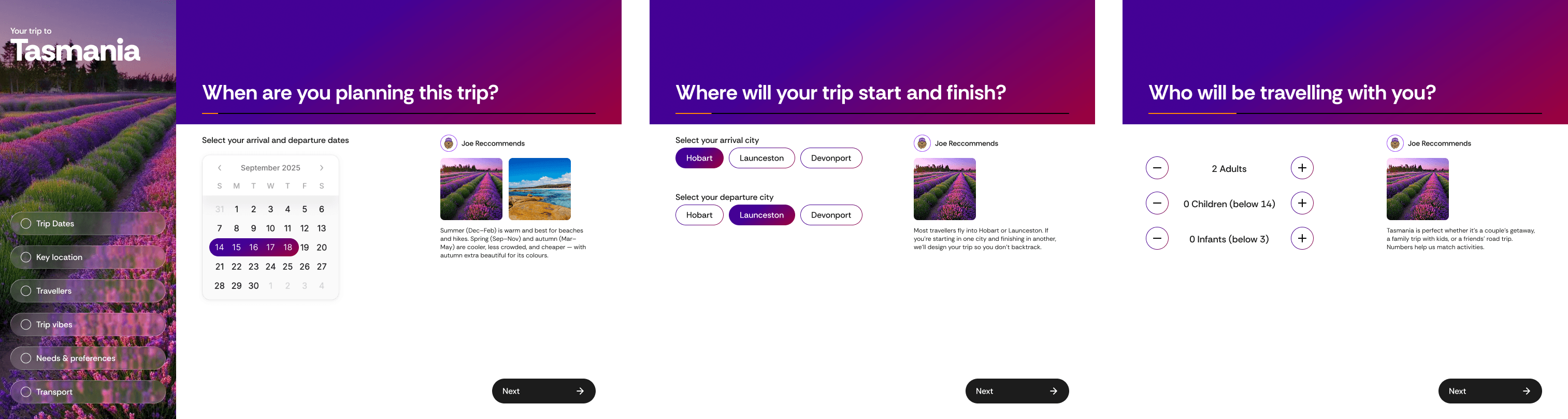
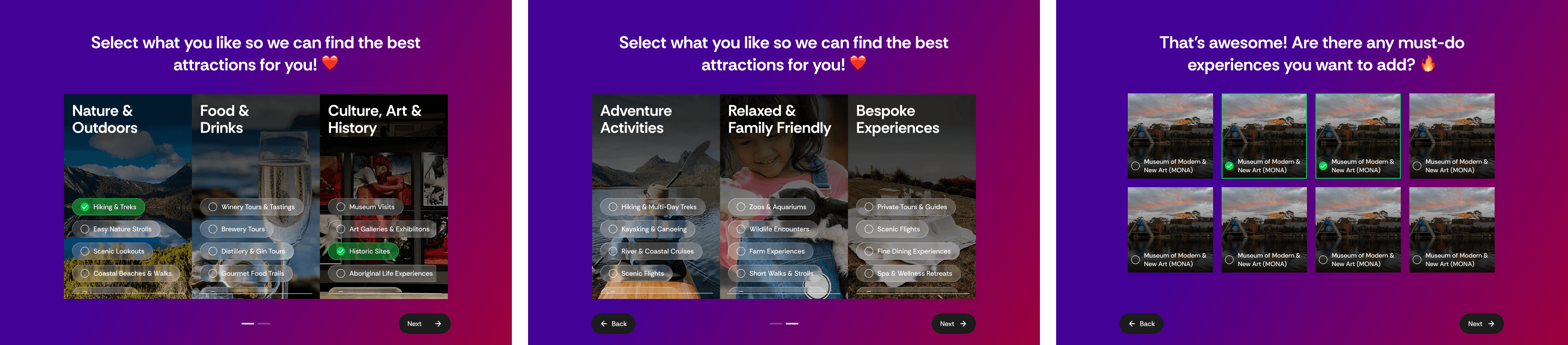
The step-wize onboarding wizard collects all inputs the AI needs — location, travellers, interests, accessibility needs, and transport. One question per screen keeps the flow focused. A top bar tracks progress.
Once preferences are submitted, the AI generates the itinerary. The result is a split-panel view: timeline on the left, interactive map on the right. Activities are bookable inline.
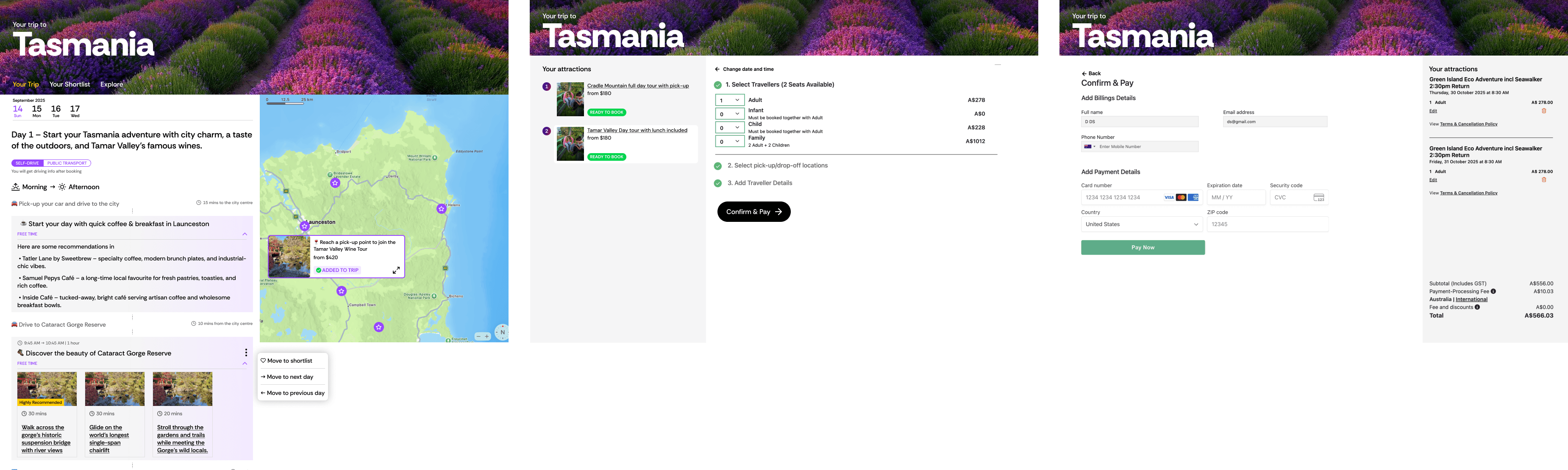
The itinerary view uses a persistent split layout — day-by-day timeline on the left, interactive map on the right — so travellers understand their trip both chronologically and geographically. Activities expand inline with pricing and a booking CTA.
My Role - Lead on Admin portal
I joined the team mid-stream, with the traveller portal already underway. My primary scope was the admin portal — the part of the product used by travel agency staff to manage their business. I owned this end-to-end: from information architecture to final screens to dev handoff.
Design Process
There was no formal discovery or research phase on this project. Rather than treating that as a limitation, I treated collaboration with the product and development team as my research method. My process moved from requirements → mental model → information architecture → UI → dev handoff, iterating at each stage.

User Personas

Admin Portal — I A